The Genius of the Barn Owl's Feathers
---
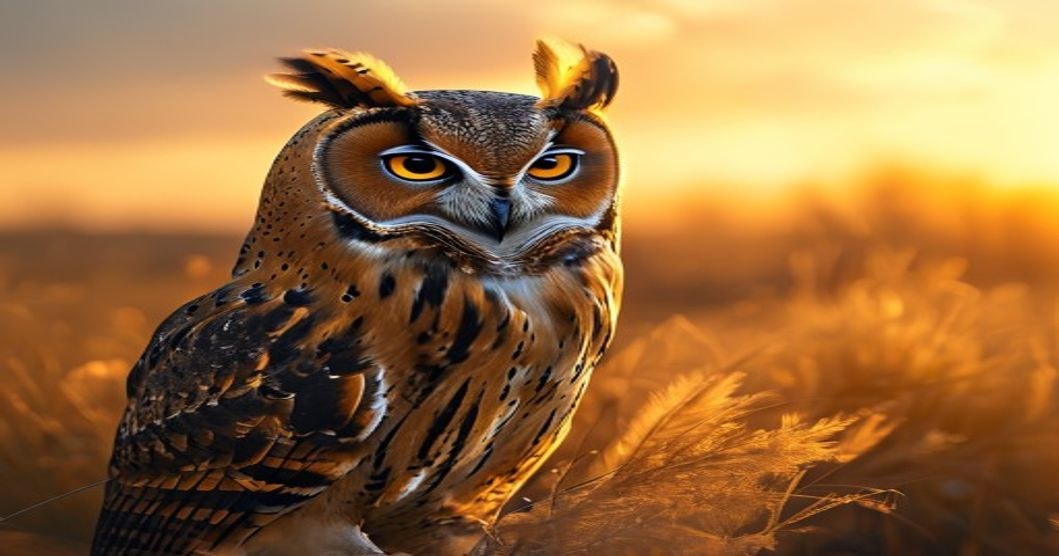
Imagine standing in a moonlit field, the air thick with the scent of damp earth and distant crops. Suddenly, a silent shadow sweeps across your vision, a feathered phantom moving with impossible grace. It’s a barn owl, and it’s not just hunting; it’s demonstrating one of nature’s most remarkable engineering feats – its feathers. These aren’t simply coverings for a bird; they’re a sophisticated system of aerodynamics, designed for unparalleled stealth and precision, a testament to millions of years of evolutionary refinement. Let’s explore the brilliance behind the barn owl’s feathers and why they’re a study in natural design.
The Silent Hunter’s Secret: Serrated Leading Edges
The barn owl’s hunting strategy is built on a single, crucial principle: silence. Unlike hawks or eagles, which rely on visual cues and loud wingbeats to signal their approach, barn owls hunt primarily by sound. They locate prey – voles, mice, and shrews – by listening for the faint rustling sounds they make. But sound travels in waves, and these waves can reflect off surfaces, creating echoes that betray the owl’s location. The key to avoiding this is the serrated leading edge of their primary flight feathers.
These edges aren’t smooth; they’re intricately divided into tiny, overlapping blades, like a miniature saw. When the owl flaps its wings, these serrations disrupt the airflow, effectively canceling out the sound generated by the movement. This process, known as “noise cancellation,” is remarkably similar to how active noise-canceling headphones work – though far more elegant and evolved. Research using laser Doppler vibrometry, a technique that measures sound vibrations, has confirmed the effectiveness of this mechanism. Scientists have shown that barn owls with damaged leading edges are significantly less effective hunters.
The Feather’s Shape: A Wing Profile of Efficiency
Beyond the serrations, the shape of a barn owl’s feather itself is remarkably adapted for silent flight. Unlike the broad, flat wings of many other birds, the barn owl’s wing is relatively narrow and streamlined. This reduces the amount of turbulence created as air flows over the surface. Furthermore, the feathers themselves are arranged in a specific way, with the primary feathers – the largest and most powerful – angled slightly backward. This helps to deflect airflow downwards, further minimizing noise.
Consider the difference between a glider and a powered flyer. A glider relies on lift generated by its wing shape, while a powered flyer uses the engine to create thrust and manipulate airflow. The barn owl’s wing is a blend of both, designed to generate sufficient lift while simultaneously minimizing the sound produced by its movement. This is a classic example of form following function, sculpted by natural selection over generations.
Specialized Feather Structures: The "Velveting" Effect
The barn owl doesn't just rely on shape; it also employs a clever trick with its feather barbs. Each feather barb, the tiny filaments that make up the feather’s surface, has a microscopic, velvety texture. This texture creates a “velveting” effect, smoothing out the airflow and reducing friction.
This isn't just about reducing noise; it’s also about improving aerodynamic efficiency. Less friction means the owl can generate more lift with less effort, allowing it to fly silently and efficiently over long distances. Researchers have found that the density and arrangement of these velvety barbs vary across the wing, with a higher density on the leading edge to maximize noise cancellation.
Feather Maintenance: A Constant Refinement
Barn owls don’t simply grow new feathers; they constantly replace and maintain them. As each feather reaches the end of its lifespan, it’s meticulously shed and replaced with a new one, exhibiting the same precise serrations and feather shape. This continuous cycle of renewal ensures that the owl’s flight capabilities remain at their peak. Interestingly, young barn owls have softer, less developed feathers, and it takes several months for their flight feathers to fully mature and achieve their silent-flight characteristics.
For example, a study in the Netherlands tracked the growth and development of barn owl flight feathers, observing a significant reduction in noise production as the feathers matured. This highlights the importance of this continuous maintenance process in the owl’s hunting success.
Beyond Hunting: A Model for Biomimicry
The genius of the barn owl’s feathers extends beyond its hunting prowess. The principles behind its silent flight are now being investigated by engineers and scientists for applications in various fields, including aircraft design and noise reduction technology. This is an example of biomimicry – learning from nature to solve human problems. The serrated leading edges, the velvety texture, and the overall wing shape are all inspiring new designs for quieter and more efficient aircraft.
Ultimately, the barn owl’s feathers represent a remarkable demonstration of natural design. It’s a powerful reminder that sometimes, the most elegant and effective solutions are found not in human invention, but in the intricate wonders of the natural world.
**Takeaway:** The barn owl’s feathers aren't just beautiful; they’re a complex and highly effective system of aerodynamics, demonstrating the power of evolution to create solutions to fundamental challenges – a lesson in silent efficiency that continues to inspire innovation today.
Frequently Asked Questions
What is the most important thing to know about The Genius of the Barn Owl's Feathers?
The core takeaway about The Genius of the Barn Owl's Feathers is to focus on practical, time-tested approaches over hype-driven advice.
Where can I learn more about The Genius of the Barn Owl's Feathers?
Authoritative coverage of The Genius of the Barn Owl's Feathers can be found through primary sources and reputable publications. Verify claims before acting.
How does The Genius of the Barn Owl's Feathers apply right now?
Use The Genius of the Barn Owl's Feathers as a lens to evaluate decisions in your situation today, then revisit periodically as the topic evolves.