Shift will clean homes for free to train future robots
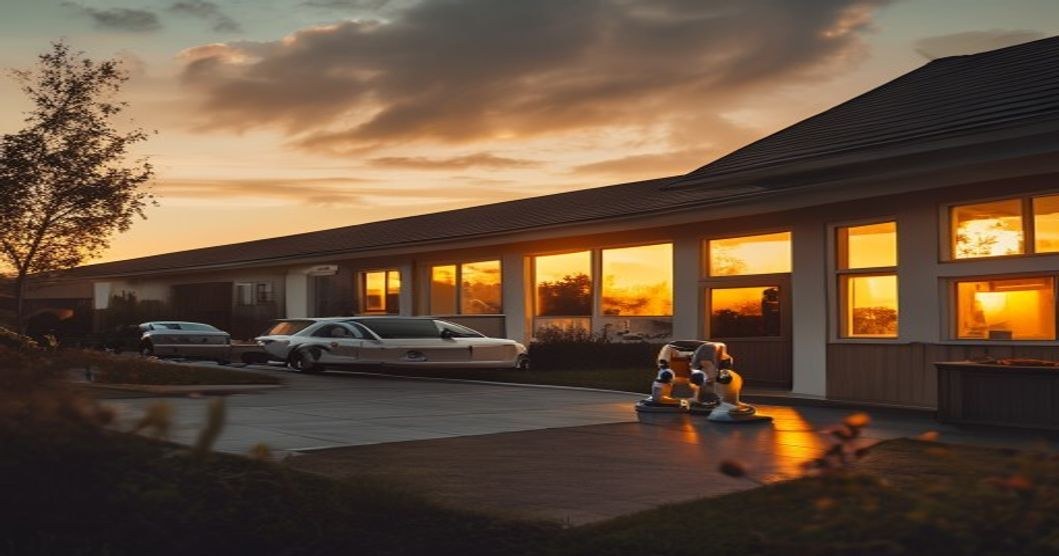
Shift: Cleaning Homes, Training the Robots of Tomorrow
The smell of lemon-scented cleaner, the rhythmic swish of a mop, the satisfying pile of neatly folded towels – for decades, these have been the hallmarks of a surprisingly consistent human task. But what if that task, that fundamental part of our lives, is about to become a training ground for a radically different kind of workforce? A project called “Shift” is quietly underway, offering homeowners in select areas the opportunity to have their homes cleaned – completely free of charge – in exchange for participating in a groundbreaking experiment: training robots to perform the same work. It’s a shift in thinking, a deliberate blurring of the lines between domestic labor and technological advancement, and it’s potentially reshaping how we approach everything from household chores to the future of work itself.
The Core of the Experiment: Data Collection and Robotic Learning
Shift isn’t just about a tidy house. It’s a meticulously designed data collection operation. The company, backed by substantial investment from several robotics firms, is deploying a team of human “trainers” – individuals like Sarah Miller, a former housekeeper in Denver, who now spends several hours each week meticulously cleaning a suburban home. These trainers aren’t simply cleaning; they’re recording *everything*. High-resolution cameras track their movements, sensors measure the force applied to different surfaces, and sophisticated audio analysis captures the nuances of their techniques – the way they dampen a stain, the pressure they apply when scrubbing a floor, the precise angle they use to dust a shelf.
“It’s fascinating,” says Mark Thompson, Shift’s lead robotics engineer. “We’re not interested in just seeing a clean house. We need to understand *how* a human achieves that cleanliness. The goal is to build robots that can replicate these skills, not just blindly follow pre-programmed instructions. The more data we gather, the more accurate and adaptable our robotic cleaners will become.” A key aspect of this data collection is the inclusion of varying home types – from single-family houses to townhomes, each presenting unique cleaning challenges. This ensures the training data is robust and representative of the diverse environments where future robotic cleaners will operate.
Beyond Dusting: Complex Tasks and Adaptive Learning
The initial focus has been on standard cleaning tasks – vacuuming, mopping, dusting, and bathroom sanitation. However, Shift is rapidly expanding to include more complex operations. One homeowner, David Chen in Portland, has been participating in training for tasks like cleaning inside ovens and refrigerators, and even tackling window washing. “They’ve shown me how to properly use different cleaning solutions and techniques for specific surfaces,” David explains. “It’s surprisingly detailed. They even have me demonstrate multiple approaches to the same task – one for heavily soiled areas, another for lighter cleaning – so the robots can learn to adapt based on the situation.”
This adaptive learning element is critical. The robots aren’t simply programmed with a fixed set of actions. Instead, they’re designed to analyze the data collected by the trainers and adjust their algorithms accordingly. For example, if Sarah consistently uses a particular pressure when cleaning a stubborn stain, the robot will eventually learn to replicate that pressure, optimizing its cleaning performance. This mimics the way humans learn – through observation, experimentation, and refinement.
The Ethical Considerations and Community Engagement
The Shift project isn’t without its ethical considerations. Transparency is a core principle. Participants receive detailed information about the data being collected, how it will be used, and who has access to it. Furthermore, Shift actively engages with the local community, hosting informational sessions and addressing concerns about privacy and the potential impact on employment. “We understand that people might have reservations about robots taking over their homes,” Mark Thompson admits. “Our goal isn’t to replace human cleaners; it’s to create a more efficient and sustainable cleaning solution. We’re building robots that can augment human capabilities, not eliminate them.”
A recent example of this community engagement involved partnering with a local vocational training center to offer courses on robotics and data analysis to residents interested in a career in the field. This proactive approach aims to mitigate potential job displacement concerns and equip individuals with the skills needed to thrive in the evolving robotics landscape.
A Glimpse into the Future: Scalability and Beyond Cleaning
While the initial focus is on residential cleaning, the technology developed through Shift has the potential to be scaled to a much broader range of applications. The same data collection and adaptive learning principles could be applied to training robots for tasks in commercial buildings, warehouses, and even manufacturing facilities. Imagine robots capable of autonomously maintaining office spaces, sorting and organizing inventory, or performing complex assembly tasks – all thanks to the insights gleaned from homes being cleaned, one meticulous step at a time. Shift represents a fundamental shift in how we approach robotics development, moving away from purely theoretical research towards real-world applications driven by observable human behavior.
**Takeaway:** Shift is more than just a cleaning experiment; it's a crucial step in building robots that can truly understand and adapt to the complexities of the real world. By offering homes and their inhabitants as training grounds, it’s accelerating the development of a future where robots don’t just mimic our actions, but learn from them, potentially transforming industries and redefining the very nature of work.
Frequently Asked Questions
What is the most important thing to know about Shift will clean homes for free to train future robots?
The core takeaway about Shift will clean homes for free to train future robots is to focus on practical, time-tested approaches over hype-driven advice.
Where can I learn more about Shift will clean homes for free to train future robots?
Authoritative coverage of Shift will clean homes for free to train future robots can be found through primary sources and reputable publications. Verify claims before acting.
How does Shift will clean homes for free to train future robots apply right now?
Use Shift will clean homes for free to train future robots as a lens to evaluate decisions in your situation today, then revisit periodically as the topic evolves.